Your first cruise is overwhelming. There are a dozen cruise lines, each with multiple ships, each with multiple cabin categories, each with itineraries that visit different ports for different durations. Then there are dining packages, drink packages, shore excursions, gratuities, and a hundred small decisions that long-time cruisers take for granted.
This guide walks you through every decision in order, with the honest trade-offs that marketing materials don't mention.
Choosing the Right Cruise Line
Cruise lines aren't interchangeable. They cater to different demographics, price points, and onboard cultures. The most common mistake first-timers make is booking the cheapest cruise and then being miserable because the vibe doesn't match what they wanted.
Family-focused, value-priced, and high-energy: Carnival, Royal Caribbean's larger ships, MSC. Premium with strong dining and a more adult mix: Celebrity, Holland America, Princess. Adults-only or near-adults-only with a calmer atmosphere: Viking, Cunard, Virgin Voyages. True luxury with smaller ships and included extras: Regent, Silversea, Seabourn, Crystal.
Read recent reviews of the specific ship — not just the line — and pay attention to passenger demographic, energy level, and dining quality.
Picking the Right Itinerary
For first-timers, we strongly recommend a 7-night Caribbean itinerary or a 7-night Alaska Inside Passage. The Caribbean offers warm weather, easy ports, and predictable seas. Alaska offers spectacular scenery, comfortable port days, and a "destination cruise" feel where the ship is part of the experience, not separate from it.
Avoid these for your first cruise: transatlantic crossings (mostly sea days), 10+ night European itineraries (too much packing and unpacking via tenders), and any expedition cruise (a different category entirely).
Cabin Categories: What's Worth the Upgrade
Interior cabins are cheapest, have no windows, and feel like a hotel room with no view. They're fine if you only sleep there.
Oceanview cabins have a window but no balcony. The window is sealed.
Balcony cabins are the sweet spot for most cruisers. The morning coffee on your private balcony watching the ship pull into a new port is worth the upgrade for almost everyone. Budget for the balcony.
Suites add space and perks (priority embarkation, specialty dining included on some lines), but the per-square-foot premium is steep.
What's Included vs What Costs Extra
Included in your fare: cabin, all meals in main dining rooms and buffets, room service basics, stage shows, pool deck and gym, kids' clubs, port transportation, basic non-alcoholic drinks (varies by line — read the fine print).
Almost always extra: alcoholic drinks, specialty coffee, specialty restaurants, shore excursions, spa, casino, photos, internet, gratuities (auto-charged on most US lines).
Drink packages and dining packages are popular but often net-negative for moderate consumers. Do the math on your actual consumption before buying.
Shore Excursions: Ship vs Independent
Ship excursions guarantee that the ship will wait for you if your tour runs late. Independent tours are usually cheaper, smaller, and more flexible — but if you miss the ship, getting to the next port is on you.
For first-timers, book ship excursions for the most complex ports (private islands, tendered ports, anywhere with limited transportation). Use independent operators for major ports where the dock is walkable to the city center and you have time pressure built in.
Gratuities: How They Actually Work
US-based cruise lines auto-charge $15-23 per person per day in gratuities. This is split among room stewards, dining staff, and behind-the-scenes crew. You can adjust at guest services, but staff genuinely depend on these for income — not paying them is functionally cutting their wages.
Specialty restaurants often add 18-20% on top of cover charges. Drink packages bake in 18-20% gratuity. Spa services add 18-20% automatically.
The Day Before Embarkation
Fly in a day early. Always. Same-day flights to the cruise port are how people miss the ship. Book a hotel near the port the night before — you'll arrive less stressed and have time to explore the embarkation city.
Have your travel documents in one place: passport (or birth certificate plus driver's license for closed-loop cruises), printed boarding pass, vaccination records if required, credit card you registered with the cruise line.
Embarkation Day
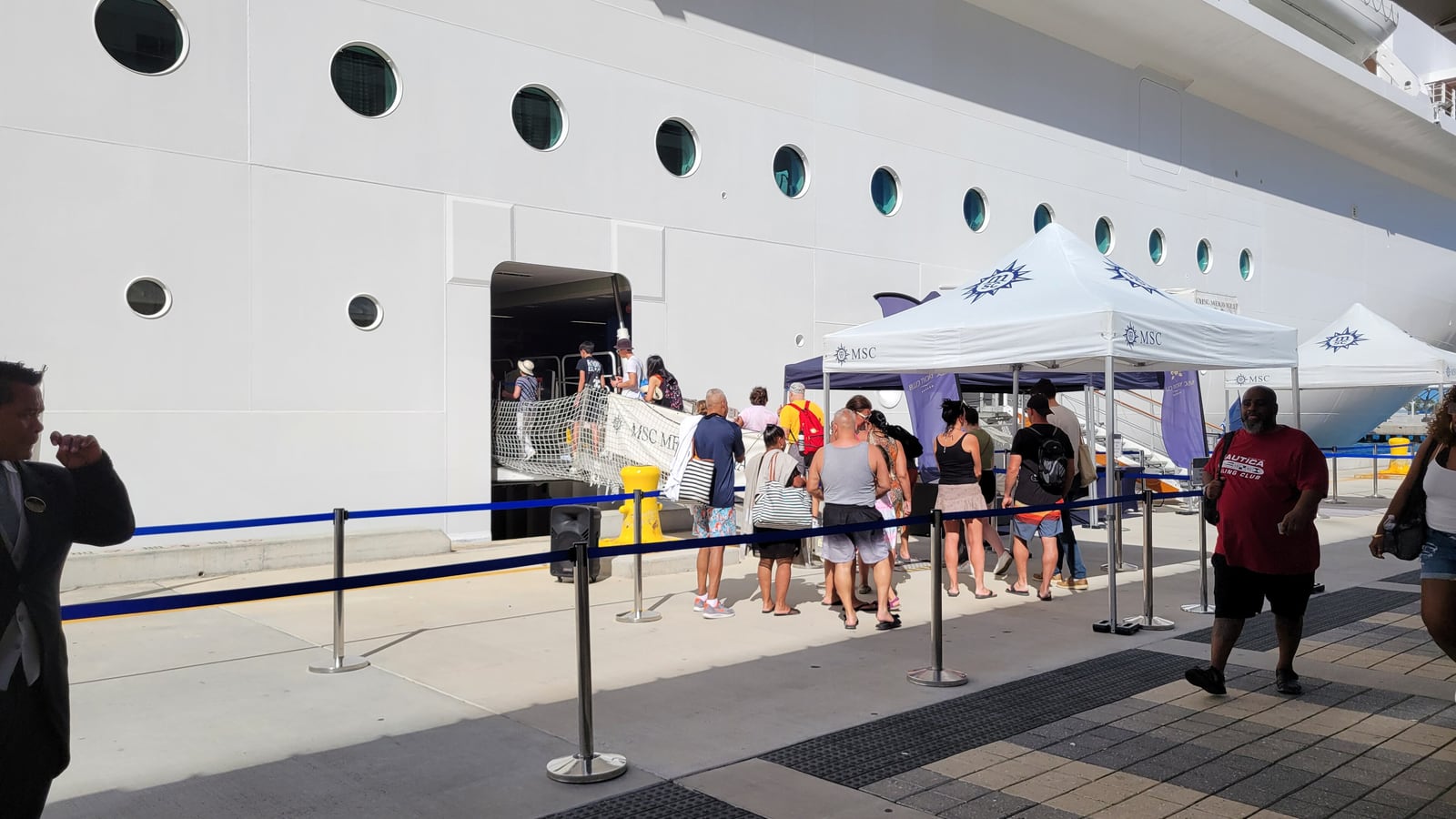
Board at your assigned check-in time. Arriving early doesn't get you on faster — it just means waiting in the terminal. Most ships board between 11am and 3pm. Cabins are typically ready by 1-2pm.
The first thing to do once aboard: book any specialty restaurants and shore excursions you want, before they sell out. Then walk the ship. Find the buffet, the main dining room, your cabin, the gym, the kids' club. By dinner you should know the layout.
Sea Days vs Port Days
Sea days are when you experience the ship: pools, shows, bars, lectures, spa. They're slower and more relaxed.
Port days are when you experience the destination. You can stay aboard if you want — the ship is at half capacity and the pool deck is empty — but most people get off.
A balanced 7-night Caribbean itinerary has 3-4 port days and 2-3 sea days. That's about right for first-timers.
The Honest Truth
You will be overstimulated. The ship will feel huge. You will forget where things are. The first day will feel chaotic. By day three, you'll have your routine, you'll know your favorite spots, and you'll start to understand why people who cruise once tend to cruise again.
Specific Recommendations for First-Time Cruisers
Recommended itineraries: a 7-night Caribbean run (any major mass-market line) is the canonical first cruise — manageable length, gentle seas, varied port mix, and pricing in the most competitive segment of the market. Start with Royal Caribbean, Princess, or Norwegian for the best balance of mass-appeal programming and approachable cabin pricing. Avoid first-cruise commitments to expedition itineraries (Antarctica, Galápagos), long voyages (transatlantic, repositioning), or destination-demanding cultural cruises (intensive Mediterranean) until you understand your sea-day comfort, motion-sensitivity, and itinerary-pace preferences.
Cabin selection: book a balcony if your budget allows — for first-time cruisers, the cabin is part of the experience and the balcony dramatically elevates the trip. If pricing forces a choice, oceanview is a meaningful step up from interior at modest premium.
Booking timing: 6–9 months out for Caribbean; 11–14 months for Mediterranean or Alaska. Book during Wave Season (January–March) for the largest cabin upgrades and onboard credit bundles.
Pre-cruise preparation: review the cruise line's app and download it 2 weeks before sailing. Set up the digital wallet, pre-book any specialty restaurants you want, and review the ship's deck plan to learn the cabin location relative to dining venues, the pool deck, and the theater.
On-ship orientation: spend the first 90 minutes after boarding walking the entire ship deck-by-deck. The familiarity pays dividends across the entire week.
Tipping: prepay gratuities at booking — locks in the current rate and removes the daily charge from the cabin folio.
For specific planning aspects, see our cabin upgrade strategies guide, our cruise tipping & gratuities guide, and our cruise beverage package guide.
The First Day Onboard: A Detailed Walkthrough
Embarkation day is the most-disorienting moment of any cruise — and the most-important day to navigate well. A practical timeline that consistently delivers a strong first cruise:
11 am: arrive at the cruise terminal. Check large luggage with the porters at the curbside drop-off (tip $1–$2 per bag). Carry a small day bag with a swimsuit, change of clothes, prescription medications, and any essentials you'll want before checked luggage arrives at the cabin (typically 4–6 hours).
11:30 am: clear security and check-in. The line moves faster than it appears; expect 30–45 minutes for major-port embarkation.
12:00 pm: board the ship. Cabins typically open at 1:00 pm or 1:30 pm — until then, head to the Lido pool deck or the buffet for lunch.
1:30 pm: drop the day bag in the cabin. Spend the next 60 minutes walking the ship deck-by-deck. Identify the cabin location relative to the main dining room, the buffet, the theater, the pool deck, the gym, the spa, and the specialty restaurants. The ship orientation pays dividends across the entire week.
3:00 pm: pre-book any specialty restaurants you want via the cruise line's app. Most lines open dining reservations at boarding; the most-popular restaurants book within hours.
4:00 pm: muster drill (mandatory safety briefing). Most modern ships have moved to digital muster (watch a video, then check in at the muster station); older ships still require in-person muster. Plan to be back at your cabin by 3:30 pm to be ready.
5:00 pm: sail-away. The most-photogenic moment of any cruise; head to the pool deck or a forward-facing public space.
6:00 pm onward: dinner, entertainment, and the rest of the evening rhythm. The first dinner is the right time to learn the dining-time and dress-code expectations for the rest of the week.
For specific planning aspects, see our cabin upgrade strategies guide, our cruise tipping & gratuities guide, and our cruise beverage package guide.