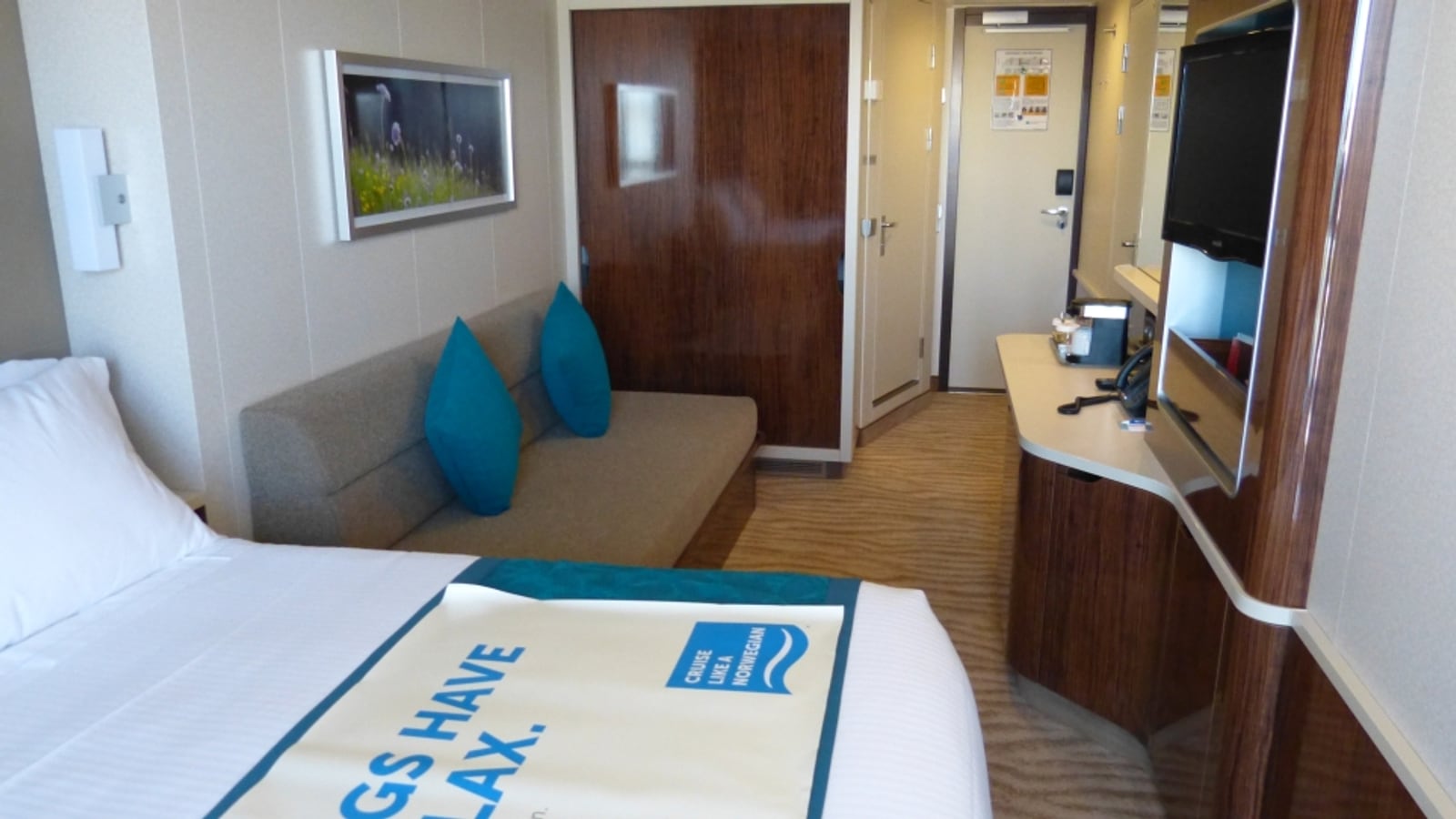
Cabin category is the single biggest line item on your cruise bill, and it's where most first-time cruisers make their costliest mistake — usually in one direction or the other. They either pay for a suite they barely use, or they save on an interior cabin and spend the week regretting the lack of natural light.
This guide covers every cabin category, who it actually suits, and when the upgrade is worth it.
Interior Cabins: The Honest Case For
Interior cabins have no window, no porthole, no natural light. They are dark when the lights are off, in the same way a well-blacked-out hotel room is dark. They are also the cheapest option, often by 30-50% versus a balcony.
Interior cabins make sense for: bargain-hunters who treat the cabin as a place to sleep and shower, solo travelers absorbing the single supplement, and short cruises (3-4 nights) where you'll barely be in the room.
Interior cabins do not make sense for: anyone who wakes up disoriented in dark rooms, longer cruises where you'll want a midday rest, anyone prone to seasickness (no horizon view to anchor against).
The newer "virtual balcony" interior cabins (Royal Caribbean) and "interior with internal-facing window" cabins (some Carnival ships, looking onto the Promenade) are interesting compromises. Real natural light still wins.
Oceanview Cabins: The Forgotten Middle
Oceanview cabins have a window — typically a large fixed pane — but no balcony. You can see outside, but you can't go outside.
The price difference between interior and oceanview is often surprisingly small ($150-300 for a week). The price difference between oceanview and balcony is usually much larger ($500-1500). For travelers on a tight budget who want light without the balcony premium, oceanview is a real value.
Oceanview cabins on lower decks may be obstructed (lifeboats, ship infrastructure). Always check the deck plan before booking. The "obstructed view" rate is sometimes very steep, but the obstruction matters more than people think — it's the difference between sea view and a wall of equipment.
Balcony Cabins: The Sweet Spot
A private balcony with a chair or two, often with enough space for a small table, is the cruising upgrade that converts skeptics into believers. Morning coffee on your own outdoor space watching the ship enter a new port is one of the great experiences of cruise travel.
Balcony cabins matter most: in scenic destinations (Alaska, Norwegian Fjords, Mediterranean coastlines), on longer cruises where the cabin time accumulates, when you have a partner who values quiet time outdoors, and on ships designed around the balcony experience.
Balcony cabins matter least: on Caribbean cruises where you'll be ashore most days, on party-focused ships where you'll be everywhere except the cabin, and on solo trips where the balcony is overkill.
For most cruisers planning a 7+ night voyage, the balcony upgrade is worth the cost. Budget for it.
Suites: Where the Math Gets Tricky
Suites add square footage, often a separate living area, and a host of perks: priority embarkation, dedicated concierge, included specialty dining on some lines, complimentary minibar, premium cabin amenities, sometimes a butler.
The suite premium is steep — often 2-4x the price of a balcony cabin. The included perks add up quickly if you'd be paying for them anyway: specialty dining 3-4 nights ($150-300), drink packages ($600-900), priority everything (priceless on busy ships).
Where suites genuinely shine: world cruises and other long voyages, ships-within-ships like Norwegian's Haven or MSC's Yacht Club (which include private restaurants, lounges, pool decks), and luxury lines where the entire ship is suite-only.
Where suites are usually overkill: short Caribbean cruises, family vacations where the kids are at the kids' club anyway, ships with weak suite-class amenities (just a bigger cabin without the perks).
Cabin Location: More Important Than People Realize
Within any category, location matters enormously.
Mid-ship cabins have less motion, shorter walks to most amenities, and tend to be quieter. Forward cabins get the most motion in rough seas and the worst noise from the bow thrusters during port arrivals (4-6am wake-ups are common). Aft cabins offer dramatic wake views from balconies but vibration from engines on some ships.
Avoid cabins directly above or below loud venues: nightclubs, pool decks, theaters, kids' areas. The deck plans show all of this if you study them.
Higher decks have better views, but lower decks are more stable in rough seas. If you're prone to seasickness, lower and mid-ship is your friend.
The Cabin Hacks Worth Knowing
Connecting cabins are gold for families and groups — they're balcony cabins with a door between them. Book early; they sell out fastest.
Single cabins (no single supplement) exist on Norwegian, Holland America, P&O, and a few others. They're tiny but they save the 100% supplement on a regular cabin.
Guarantee bookings (you book a category and the line assigns the cabin) save 10-25% versus picking a specific cabin. The risk is real: you could end up directly under the buffet or above the laundry. If location matters to you, pay for the choice.
Cabin upgrades at check-in are mostly a myth on busy sailings. They do happen on under-booked itineraries — be polite, be persistent, but don't count on it.
The Bottom Line
For most travelers planning a 7-night cruise: book a balcony cabin, mid-ship, on a passenger deck (not directly under the pool deck or above the show lounge). That single decision avoids 90% of cabin regret. Save the suite money for excursions, dining, and the next cruise.
Cabin Decision Framework
Step 1: Define the trip's character.
Is this a port-dense itinerary where you'll rarely be in the cabin during waking hours (Mediterranean, Alaska shore-day-heavy sailings)? An interior or oceanview is rational. Is this a sea-day-heavy or scenic-cruising itinerary (Alaska, Norwegian fjords, Caribbean repositioning)? A balcony is essentially required.
Step 2: Match cabin tier to budget.
The ladder: interior ($) → oceanview ($) → balcony ($$) → mini-suite ($$) → full suite ($$$). Each step adds roughly 30–50% to the cabin price for meaningfully more space and amenities. The biggest value step for most travelers is interior-to-oceanview or oceanview-to-balcony; the suite premium is more discretionary.
Step 3: Pick the cabin location within the tier.
Mid-ship cabins are quietest and smoothest-sailing; bow cabins feel motion most. Aft-facing balconies are the largest balconies on most ships and book early. Avoid cabins directly under the Lido pool deck (chair scraping at 6 am), above the theater (late-night bass), or near the laundry rooms (24-hour activity).
Step 4: Consider the upgrade products.
The ship-within-a-ship suite products (Royal Caribbean Star Class, NCL Haven, MSC Yacht Club, Celebrity The Retreat) deliver luxury-cruise-equivalent experiences on mass-market and premium-mid ships. The per-night cost is roughly 60–80% of true luxury cruising — substantial, but with the option to access the wider ship's programming when desired.
Step 5: Use the bid-up programs.
Most major lines offer post-booking bid-up programs (30–90 days before sailing). Book the entry-level cabin, then bid 30–50% of the published cabin-tier difference. The system routinely accepts bids closer to sailing.
For the canonical deep-dive, see our cabin upgrade strategies guide; for the luxury alternative where every cabin is a suite, see our luxury cruise lines guide; for family-cabin specifics, see our multigenerational cruise guide.
Cabin Selection by Itinerary Type
Caribbean and warm-weather sea-day-heavy itineraries: a balcony is the right choice. The cabin becomes a primary outdoor space on warm sea days; the balcony delivers genuine outdoor relaxation that interior or oceanview cabins cannot match.
Mediterranean and port-heavy cultural itineraries: an interior or oceanview can work well. Port days dominate the schedule; you'll be off the ship by 8 am and back by 6 pm most days. The cabin functions primarily as a sleeping and changing space. Save the balcony budget for shore excursions or a higher-quality stateroom in another category.
Alaska and scenic-cruising-heavy itineraries: a balcony is essentially required. Scenic cruising days (Glacier Bay, Hubbard Glacier, the Inside Passage, Norwegian fjords) transform the cabin into a primary viewing space; missing the scenic cruising from the cabin is a meaningful sacrifice.
Long voyages (transatlantic, transpacific, world cruise segments): cabin upgrade matters most. Long voyages mean the cabin is your home for an extended period; a meaningful upgrade in cabin space and amenities pays dividends across the trip. The Owner's Suite or Penthouse Suite tier is genuinely worth considering for any voyage longer than 14 nights.
Expedition cruises (Antarctica, Galápagos, Arctic): cabin tier matters less than expedition program quality. Expedition itineraries are dominated by ashore landings and lectures; cabin upgrades are discretionary.
Balcony Cabin Sub-Selection
Within the balcony tier, location matters. Aft-facing balconies (the largest balconies on most ships) book early and are worth the premium for travelers prioritizing balcony space. Mid-ship balconies are quietest and smoothest-sailing. Bow balconies feel motion most. Avoid balconies on the deck directly above the Lido pool deck (chair scraping at 6 am) or directly below the jogging track (footfall at 5 am).
Suite Tier Considerations
The ship-within-a-ship suite products (Royal Caribbean Star Class, NCL Haven, MSC Yacht Club, Celebrity The Retreat) deliver luxury-cruise-equivalent experiences on mass-market ships. The pricing is roughly 1.7–2.2x a standard balcony, but the all-inclusive math (drinks, dining, Wi-Fi, gratuities included) is competitive once you total comparable add-ons. For travelers wanting the luxury experience without committing to a true luxury line, these products are genuinely the right answer.
For the canonical deep-dive, see our cabin upgrade strategies guide; for the luxury alternative where every cabin is a suite, see our luxury cruise lines guide; for family-cabin specifics, see our multigenerational cruise guide.