The luxury cruise segment is small — perhaps 30 ships across the major operators — but represents a meaningfully different cruise experience than the mass-market and premium-mid lines. Higher staff-to-passenger ratios, higher per-night cost, smaller and more flexible ships, and a more inclusive pricing model all combine into a vacation format that the larger lines simply cannot replicate. The downside is the price; the upside is a trip where the small frictions of mass-market cruising disappear entirely.
This guide walks through the major luxury operators, the genuine differences between them, the typical price points, and the kinds of travelers each line serves best. The aim is to help you pick the right line on the first try rather than learning by expensive trial and error.
Contents
This guide covers: what defines luxury cruising versus premium-mid; the major operators and how they differ; pricing benchmarks; itinerary specialization; the on-ship experience differences; how to think about value; and the most-asked luxury cruise questions.
What Defines Luxury Cruising
Luxury cruise lines share several structural characteristics that distinguish them from mass-market and premium-mid lines:
Small ships. 100–750 guests typical, occasionally up to 930 (Viking Ocean). The intimate scale changes everything about the experience — staff recognize you within a day, public spaces feel like a private club, and the ship can dock at smaller ports.
High staff-to-guest ratio. Typically 1:1.5 or better, versus 1:3 on mass-market lines. The service is genuinely attentive without being intrusive.
Inclusive pricing. Most luxury lines include all dining (specialty restaurants), most beverages (premium spirits and wines), gratuities, and increasingly excursions and Wi-Fi. The fare looks high but the all-in cost is competitive with premium-mid lines once add-ons are counted.
No nickel-and-diming. No upcharge dining, no soft-drink packages, no tipping prompts. The financial transactions are largely complete at booking.
Adult-leaning atmosphere. No kids' clubs (or very small ones), no high-energy entertainment, no ship-wide casino atmosphere. The shipboard rhythm is calmer and more refined.
These characteristics combine into a cruise experience that's harder to deliver on a 4,000-passenger ship even with massive budget. The small-ship economics are the foundation.
The Major Operators
The luxury cruise segment has roughly six major operators, each with a distinct positioning:
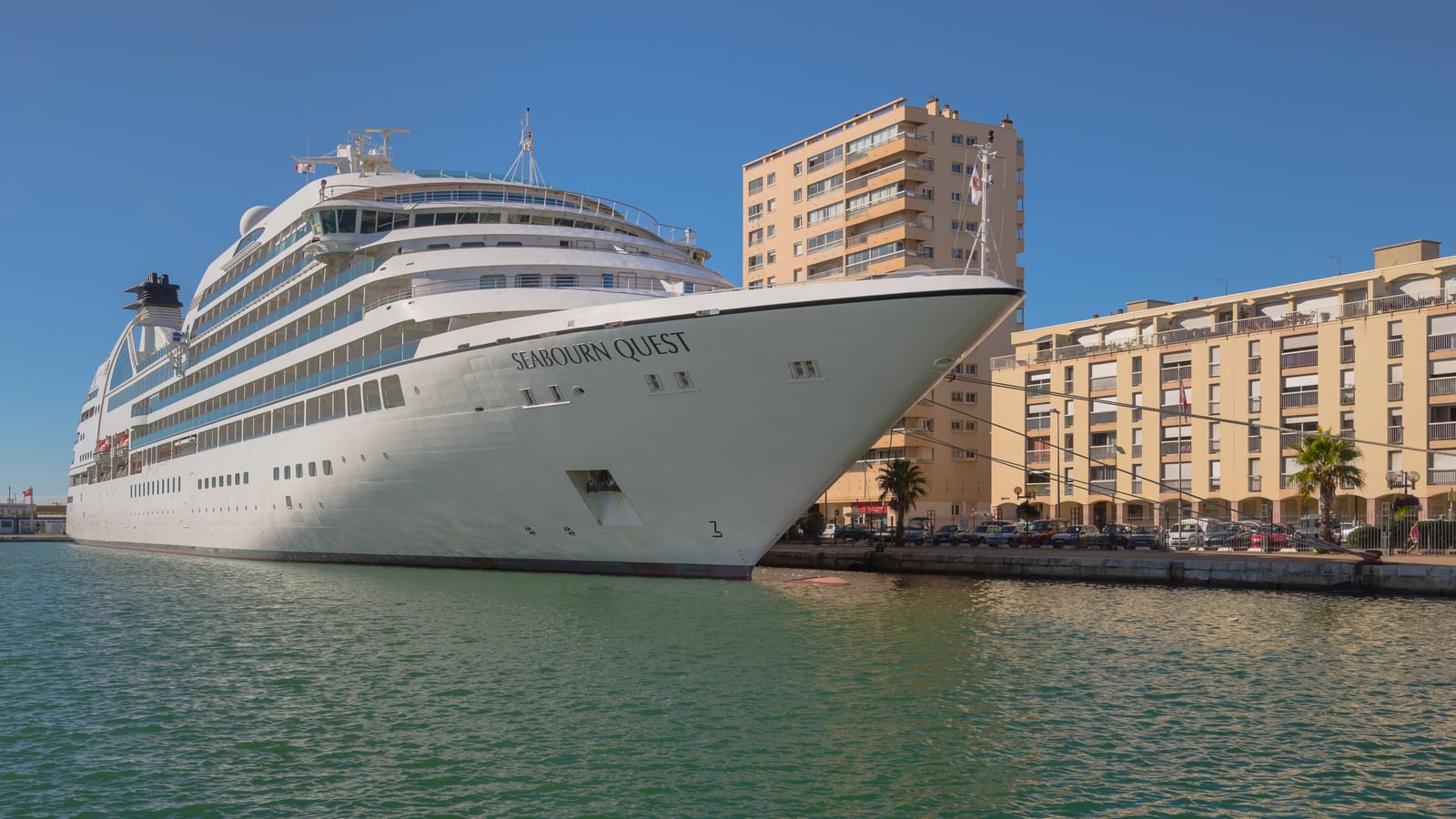
Seabourn (Carnival Corporation). 5 ships, 458–600 guests. The classic ultra-luxury operator: all-suite, all-inclusive, high-end cuisine (Thomas Keller partnership), genuinely refined service. Strong in Mediterranean, Caribbean, expedition (Seabourn Pursuit, Venture). The "Seabourn signature" is the small-ship beach barbecue with caviar service. Per-night $700–$1,400 typical.
Silversea (Royal Caribbean Group). 12 ships, 100–728 guests. The largest luxury fleet, with strong expedition presence (Silver Endeavour, Cloud, Origin). Door-to-door inclusions (private car transfers, business-class flights on some itineraries) genuinely simplify travel. Per-night $700–$1,500 typical; expedition higher.
Regent Seven Seas (Norwegian Cruise Line Holdings). 6 ships, 490–746 guests. The most all-inclusive of the luxury operators — included excursions on most itineraries, business-class flights on most international cruises. The "all-inclusive of all-inclusive" claim is genuine. Per-night $700–$1,800 typical, but with very few add-ons.
Crystal Cruises (relaunched under A&K). 2 ships post-relaunch (Symphony, Serenity), 740–848 guests. The traditional Crystal experience with renewed investment. Strong in long voyages (Crystal World Cruises, segment voyages). Per-night $800–$1,800 typical.
Viking Ocean Cruises. 12 ships and growing, 930 guests each. The "destination-focused luxury" line: included shore excursions in every port, no kids, no casino, included Wi-Fi and beer/wine at meals. Slightly less inclusive than Regent but at meaningfully lower per-night cost. Per-night $400–$900 typical. See our Viking Star Mediterranean review for the canonical experience.
Oceania Cruises (also NCLH). 8 ships, 670–1,250 guests. Technically "premium-mid" but increasingly luxury-adjacent. Strong dining program (more specialty restaurants than any peer line). Less inclusive than the others — drinks and excursions extra typically. Per-night $400–$900 typical.
Pricing Benchmarks
Per-night fares vary dramatically by season, itinerary, and cabin class:
Caribbean (the entry-level luxury market): $400–$900 per person per night for a balcony or suite, all-in.
Mediterranean (the core luxury market): $600–$1,400 per person per night for a balcony or suite, all-in.
Northern Europe (similar to Mediterranean): $600–$1,500 per person per night, all-in.
Expedition (Antarctica, Arctic, Galápagos): $1,200–$3,000 per person per night, all-in.
Long voyages and world cruises: per-night declines as length increases; expect $500–$900 per person per night for a 60+ night world segment.
A useful rule: luxury cruising is roughly 2x the per-night cost of premium-mid cruising for similar regions, in exchange for inclusive pricing, smaller ships, and a meaningfully different on-ship rhythm.
Itinerary Specialization
Each luxury line has regions where it specializes:
Seabourn: Mediterranean (especially summer), Caribbean (winter), South Pacific. The Australian summer (December–March) is a particular Seabourn strength.
Silversea: Mediterranean, expedition globally, the small-port itineraries that the larger luxury lines can't access.
Regent: Mediterranean, Caribbean, Asia (the included business-class flights make Asia particularly attractive). Strong in long Mediterranean voyages (12–14 nights).
Crystal: world cruises and long voyages. The signature multi-month itineraries are unmatched.
Viking Ocean: Mediterranean, Northern Europe (the river-cruise heritage shows in the cultural-port itineraries), Caribbean (winter), Asia. See our Viking Sky Iceland review for an Atlantic itinerary example.
Oceania: Mediterranean (a particular strength), South America, Asia, world cruises.
On-Ship Experience Differences
Beyond the structural luxury characteristics, the on-ship experiences differ in tone:
Seabourn and Silversea: the most "yacht-like" experience. Private feel, refined evenings, strong wine programs.
Regent: the most "all-inclusive resort at sea" experience. Generous portions, generous pours, more relaxed atmosphere than Seabourn or Silversea.
Crystal: traditional refined cruising with strong service heritage; perhaps the most formal of the luxury lines.
Viking: the most "design-forward" experience. Scandinavian aesthetic, strong cultural enrichment program, no-casino-no-kids policy. The most cerebral of the luxury operators.
Oceania: the most "dining-focused" experience. The food program is the centerpiece; the rest of the on-ship experience is good but secondary.
How to Think About Value
Luxury cruising looks expensive against mass-market lines but the comparison is misleading once add-ons are counted:
Mass-market cruise (e.g., Royal Caribbean balcony, Caribbean): $200/night base × 2 people = $400/night × 7 = $2,800. Add gratuities ($35/person/day = $490), beverage package ($100/person/day = $1,400), Wi-Fi ($25/person/day = $350), specialty dining ($300), excursions ($600). All-in: ~$5,940 for two people, or $424/night.
Luxury cruise (e.g., Viking balcony, Caribbean): $700/night per person × 2 = $1,400/night × 7 = $9,800. Add nothing — gratuities, drinks, Wi-Fi, excursions all included. All-in: $9,800 for two people, or $1,400/night.
The luxury cruise costs roughly 2.3x the mass-market all-in for that comparison. The question is whether the smaller-ship experience, the included excursions, the no-add-on simplicity, and the meaningfully different on-ship rhythm are worth the premium for your party. For most travelers, the answer is "occasionally yes, not always" — luxury cruising is a 2–3 year cycle for most rather than every-trip.
Common Questions
Best luxury line for first-time luxury cruisers: Viking Ocean. The lower price point, the included excursions, and the Scandinavian aesthetic make it the gentlest luxury introduction.
Best luxury line for repeat ultra-luxury travelers: Seabourn or Silversea. The smaller-ship intimacy and the highest service ratios deliver the most distinctive luxury experience.
Best luxury line for long voyages: Crystal or Regent. Both are designed for the multi-week cruise format.
Are luxury cruises actually all-inclusive? Mostly. Spa, premium wines beyond what's poured at meals, and a few signature services (caviar bar fees, certain specialty dining options) are typically extra. The 90% inclusive figure is accurate for most of these lines.
For broader planning, see our Mediterranean cruise guide and our honeymoon cruise guide; for the cabin upgrade tradeoffs, see our cabin upgrade strategies guide.
Final Take
The luxury cruise segment delivers a genuinely different vacation format than mass-market and premium-mid cruising — smaller ships, included pricing, refined service, adult-focused atmosphere. The price premium is substantial but largely justified once add-ons on the cheaper lines are counted. Pick the line that matches your travel rhythm: Viking for the cerebral cultural traveler, Seabourn or Silversea for the ultra-refined experience, Regent for the truly inclusive promise, Crystal for the long-voyage tradition, Oceania for the dining-first traveler.