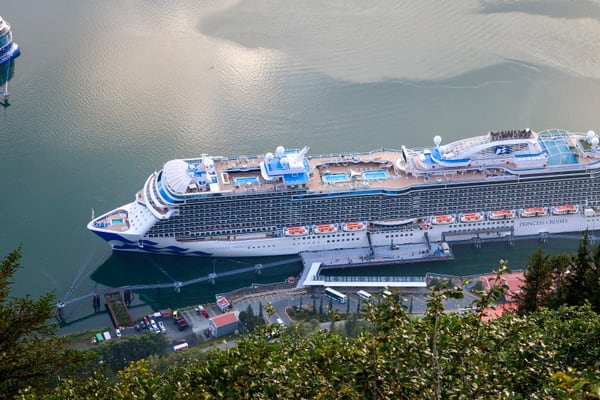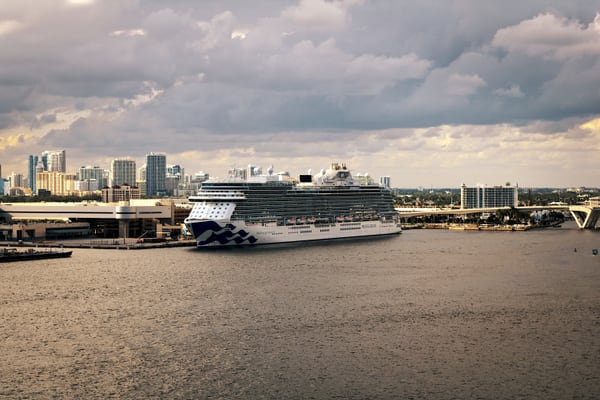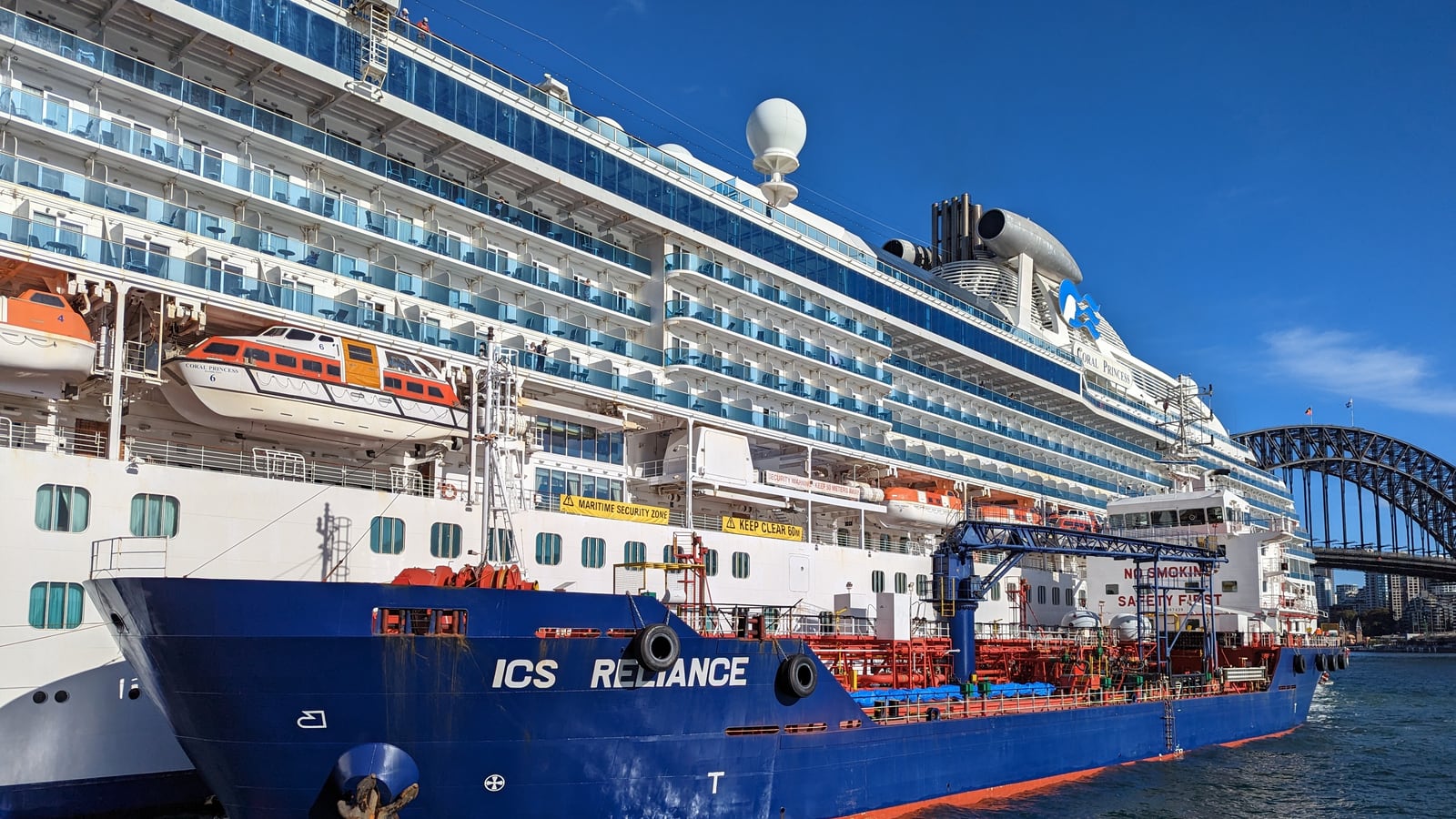
Coral Princess is one of two surviving Panamax-dimensioned Princess ships — sister Island Princess being the other — and her continued presence in the fleet is justified almost entirely by one itinerary: the full Panama Canal transit. Newer Princess ships are too wide for the original 1914 locks; Coral fits, and that single fact gives this twenty-three-year-old ship an irreplaceable role in the fleet. Reviewed on the ten-night Fort Lauderdale–to–Los Angeles full transit in late January 2026, the sailing ranks among the most memorable cruise experiences of recent years.
The Canal
Canal day is the trip-defining day. The ship enters the Atlantic-side Gatun Locks at first light, lifts 85 feet through three lock chambers into Gatun Lake, transits the lake and the Culebra Cut for the next several hours, and descends through Pedro Miguel and Miraflores Locks on the Pacific side. The full transit takes 8–10 hours.
It is unlike any other cruise day. The locks are tight to the ship — there are 18 inches of clearance on each side at the original locks — and the experience of being raised and lowered by water is genuinely awe-inspiring at scale. The bow and observation decks are crowded; the aft observation lounge offers more reliable space and is a strong base for most of the transit. Princess's narration team — usually a guest historian working with the Smithsonian — provides commentary throughout. Excellent.
The new Neopanamax locks (built in 2016) take the larger ships and are visible during the transit. Coral fits the original; you experience canal history exactly as it was built.
Cabins
We booked a Mini-Suite Veranda on Deck 12. Coral's mini-suites are 285 square feet plus 95 square feet of balcony — generous for the ship's age. The interior finishes are dated — heavier carpets, older bathroom fittings, the smaller TVs of the early-2000s era — but functional. Bedding has been refreshed to the Princess Luxury Bed standard. Storage was generous.
If you book a standard balcony, expect 217 square feet plus 40 square feet of balcony — the cabin is meaningfully smaller than the newer Royal-class ships and the dated interiors show. For a ten-night sailing, the mini-suite upgrade is worth the math.
Food
The main dining rooms — Bordeaux and Provence — operated competently. We ate seven of ten dinners there with a wait team that we got to know well over the course of the cruise. Quality was consistent; the longer voyage gave the kitchen time to prepare more interesting menu rotations.
Specialty dining was limited. Sabatini's Italian was the standout — properly executed tableside Italian with attentive service. The Bayou Café & Steakhouse was the only steakhouse option (the Crown Grill format hadn't been added when Coral was built); fine, not memorable. Sushi was à la carte at the wine bar; worth one visit.
The buffet (Horizon Court) was the standard Princess station-based operation — better than mass-market competitors, comparable to the newer Princess hardware.
Entertainment
The Princess Theater hosted the standard production lineup — well-staged, tonally Princess. The Universe Lounge hosted game shows and small comedy. The Wheelhouse Bar — an English-pub-style room — was our daily evening pre-dinner cocktail spot.
The destination lecturer was the standout entertainment of the trip. Two formal lectures plus daily port commentary, all delivered by a credentialed naval historian working with the Smithsonian. On a ten-night canal-and-Caribbean cruise, that intellectual layer adds real value.
Value
Mini-Suite Veranda for two adults on the ten-night transit booked nine months ahead came in at $4,940 all in including taxes and gratuities. We added the Princess Plus package ($60/day each) for the all-in of $6,140 — about $307/night per person on a ten-night Panama Canal experience. Excellent value compared to the Holland America equivalent (Coral Discovery on a similar transit) at $7,200 cabin equivalent.
For an alternative West Coast Princess experience, see our Discovery Princess Mexican Riviera review; for the larger Royal-class Princess experience, see Enchanted Princess Eastern Caribbean.
Overall
Coral Princess is a single-purpose ship — built and now operated to serve the Panama Canal full-transit market that her newer sisters cannot. The hardware is dated; the itinerary is unmatched; the pricing is competitive. For travelers chasing the bucket-list canal experience, this is the answer.
Who It's For
Bucket-list cruisers with the canal on the must-do list; experienced cruisers who can read past dated hardware to a great itinerary; longer-cruise enthusiasts who appreciate the deeper rhythm of a 10+ night sailing.
Who It's Not For
First-time cruisers (the dated hardware will set the wrong expectation for the category); travelers who insist on current cabin tech; anyone who wants a high-energy big-ship vacation.
Cabin Strategy and Panama Canal Specifics
Coral Princess is a Panamax-sized ship — purpose-designed to transit the original Panama Canal locks with no spare clearance — which makes the canal-day experience one of the most scenic in the cruise market. Both port and starboard balcony cabins get full canal views during the transit (the ship is narrow enough); pick whichever side has the better seasonal sun angle for your sailing month. Avoid forward cabins on lower decks for the Pacific approach where Pacific swell is most pronounced. Book 9–12 months out for full transit sailings (the best deals are on October–April departures avoiding Atlantic hurricane season). Pre-book Sabatini's and the Crown Grill on day one; both have only 2–3 evening turns per cruise. For broader transit planning context, see our transatlantic repositioning guide for the related sea-day-heavy itinerary format.
Editorial Cross-References
For the broader fleet context and itinerary calendar, see our Princess cruise line page. For broader planning context, see our cabin upgrade strategies guide.