The Caribbean accounts for roughly 35% of global cruise capacity in any given year. That dominance is the result of three real advantages: short flights from major U.S. cruise ports, reliable warm weather across most of the year, and a remarkable density of small island nations that pack genuine cultural and natural variety into seven-night itineraries. But that same scale means choice fatigue, and the wrong booking decision can leave a first-time Caribbean cruiser with a thoroughly average vacation.
This guide walks through the four main Caribbean regions, the seasonal trade-offs, the cruise-line tone differences, and the small details that separate a great Caribbean cruise from a passable one.
Contents
This guide covers: the four Caribbean regions and what makes each distinct; the right time of year to sail (and when to avoid); choosing the right cruise line for your travel style; how to think about ports versus the ship; the value math for the Caribbean specifically; and a checklist of the most-asked questions for first-time Caribbean cruisers.
The Four Caribbean Regions
The Caribbean cruise market divides into four sub-regions. Each has distinctive ports, a different set of operating cruise lines, and a different best-time-to-sail profile.
Eastern Caribbean
The Eastern Caribbean covers the Bahamas, the Turks & Caicos, the U.S. and British Virgin Islands, and Puerto Rico. Typical itineraries from Florida call at Nassau, San Juan, St. Thomas, and a private island day at CocoCay or Half Moon Cay. This is the most-cruised Caribbean route and the one most first-time cruisers will book.
The Eastern is the most reliably warm and dry region, and the ports — particularly Old San Juan and the U.S. Virgin Islands — are properly cultural day stops rather than just beach venues. Cruise-line private islands (Royal Caribbean's Perfect Day at CocoCay, Carnival/HAL's Half Moon Cay) are at their best on Eastern itineraries.
Western Caribbean
The Western covers the Yucatan Peninsula (Cozumel, Costa Maya), Belize, Honduras (Roatán), and the Cayman Islands. Itineraries from Florida, Texas (Galveston), and Louisiana (New Orleans) cover this region.
The Western is the diving-and-snorkeling Caribbean — Belize's barrier reef, Roatán's reef walls, and Cozumel's wall dives are world-class. Mexican Riviera-equivalent on the Caribbean side. Pricing is typically the lowest in the Caribbean market because Texas and Louisiana home ports keep capacity high.
Southern Caribbean
The Southern covers Aruba, Bonaire, Curaçao (the ABC islands), Grenada, Barbados, and the Windward and Leeward chains. Itineraries from San Juan, Fort Lauderdale, or repositioning routes from Europe.
This is the year-round Caribbean — the ABC islands sit below the hurricane belt and are functionally hurricane-safe in any season. Bonaire is one of the world's premier shore-snorkeling destinations. Curaçao's Willemstad is the most walkable Caribbean port. The Southern often demands a longer cruise (10–14 nights) and pricing tends premium-mid.
Bahamas Short Cruises
Three- and four-night Bahamas cruises from Florida (especially Miami and Port Canaveral) call at Nassau, the cruise-line private islands, and occasionally Freeport. These are the cheapest cruises in the world by per-night cost and the right introduction format for many first-time cruisers.
When to Sail
The Caribbean cruise season is technically year-round, but the experience varies dramatically by month.
High season: late December through April. Reliable warm and dry weather, peak prices. Christmas and spring break weeks command 30–50% premiums; book those windows 9–12 months ahead.
Shoulder season: May and early June, plus November. Often the value sweet spot — warm weather, dry, modest prices. May is particularly excellent for Eastern Caribbean.
Hurricane season: June through November (peak August through October). The genuine risk is real but lower than the marketing makes it sound. Caribbean cruises rarely cancel; itineraries do shift to dodge weather. Pricing reflects the risk — September through October sees the lowest prices of the year. Travel insurance is non-negotiable in this window.
Off-season: there is no true off-season for the Caribbean. Even September has fully booked sailings.
Picking the Right Cruise Line
The major cruise lines fall into three tiers for Caribbean operations:
Mainstream value: Carnival, Royal Caribbean, Norwegian, MSC, Disney. Family-focused, big-ship, busy-energy. Pricing $100–$200 per person per night for a balcony cabin.
Premium-mid: Princess, Holland America, Celebrity. Quieter, more refined, mid-sized to large ships. Pricing $200–$350 per person per night for a balcony cabin.
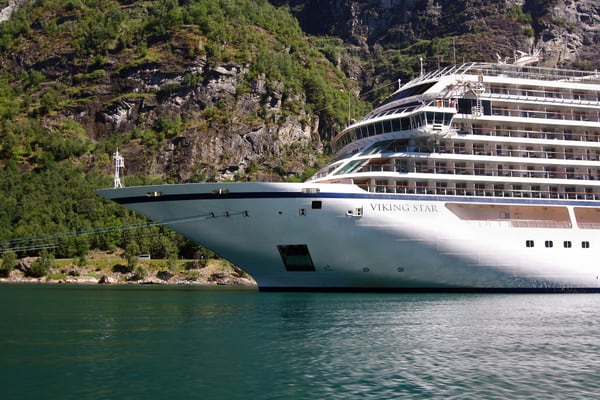
Premium and luxury: Cunard, Viking, Oceania, Silversea, Regent, Seabourn, Crystal. Smaller ships, included pricing, refined onboard. Pricing $400–$800+ per person per night.
For a sense of how the value tier executes Caribbean cruising, see our Carnival Celebration Tropical Eastern Caribbean review; for the premium-mid tier, see our Enchanted Princess Eastern Caribbean review or Celebrity Edge Southern Caribbean review.
Ports vs. The Ship
The fundamental Caribbean booking decision: are you booking the destination or the ship?
Ports as the destination means smaller and more agile ships, more port days per week, longer port times, more independent excursion planning. Premium-mid lines on longer itineraries do this best.
The ship as the destination means big ships, fewer port days per week, more sea days, and ports treated as add-ons. Mainstream mega-ships do this best — the Royal Caribbean Oasis class is the canonical example.
Both are valid; pick based on your preference. Don't book a 6,500-passenger mega-ship and then complain that the ports felt like add-ons; that's the model.
The Value Math
A balcony Caribbean cruise on a mainstream line currently costs about $150–$250 per person per night all in (cruise fare plus drinks plus gratuities plus a couple of specialty meals). Compare this to:
- A Caribbean all-inclusive resort: $300–$500 per person per night.
- A Caribbean Airbnb plus restaurants: $250–$450 per person per night, plus the friction of cooking and self-arranging activities.
- A Caribbean island-hop with flights and hotels: $400–$700 per person per night, plus serious logistical complexity.
Cruising the Caribbean is the cheapest comfortable way to see the Caribbean. The price advantage is real and substantial.
Common First-Timer Questions
Best port for a first-time Caribbean cruiser: CocoCay or Half Moon Cay (the cruise-line private islands). They eliminate every friction.
Tipping: gratuities are auto-charged at $16–$20 per person per day. Bar tips are auto-added to drinks. Pre-paid gratuities are available and recommended.
Dress code: most lines have one or two "elevated" nights per week. Otherwise smart casual is fine.
Wi-Fi: expensive (typically $20–$30 per day). Often not very fast. Bring your own connectivity plan if you genuinely need to work.
For the broader cruise-budget conversation, see our guide to the best time to book a cruise; for first-time cruise overall, see the first-time cruiser complete guide.
Final Take
The Caribbean rewards travelers who pick the right combination of region, season, and cruise line tier for their actual preferences. There is no objectively best Caribbean cruise — there are just better and worse matches for your travel style. Spend an hour on the trade-offs above before committing to a booking and you will get a meaningfully better trip.